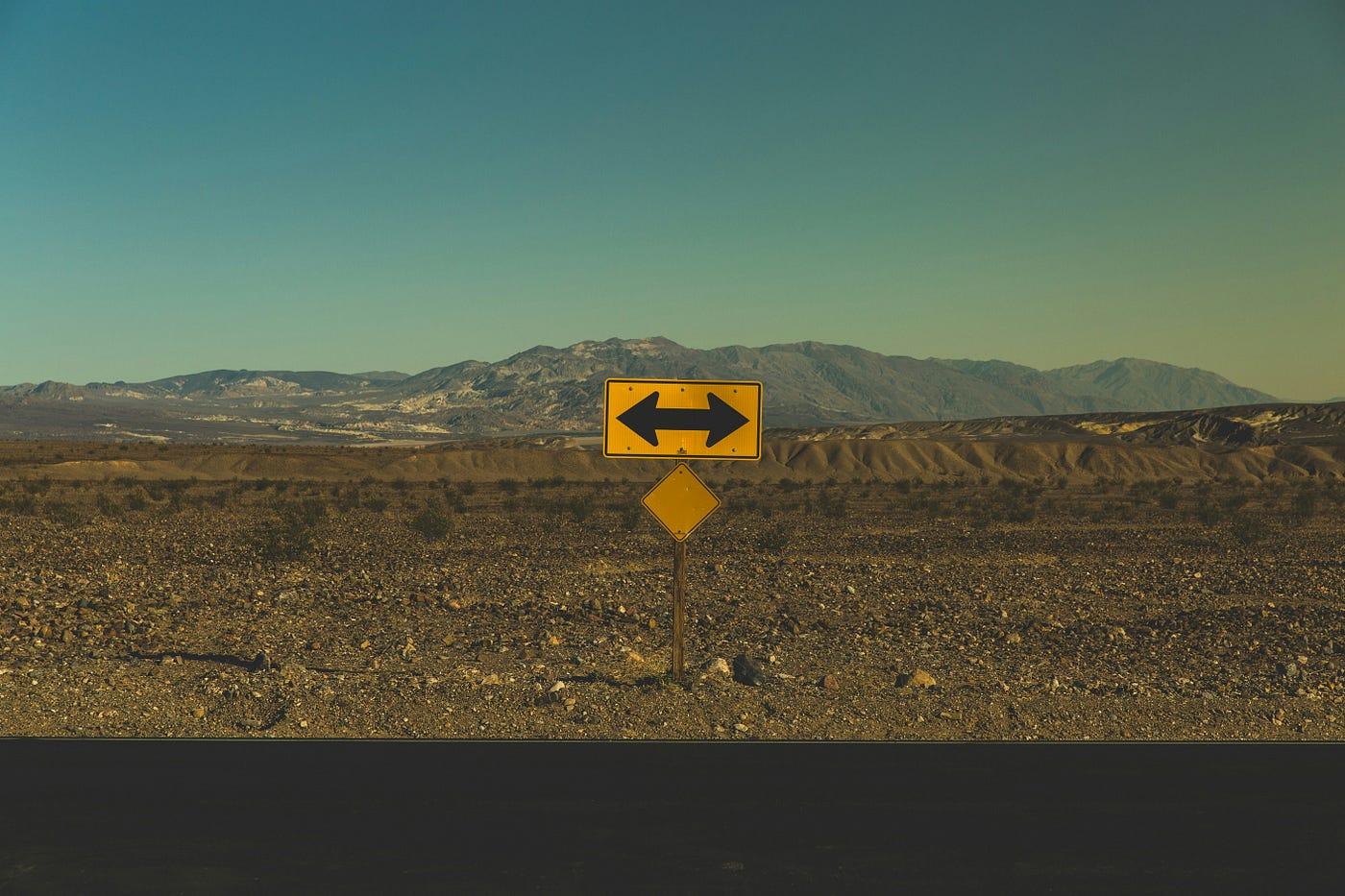

Why we keep making the same choices, even when we want our lives to change.
We can spend years wanting something in our lives to change, yet continue making the same choices that leave us exactly where we are.
After a decade of coaching, I’ve encountered this pattern in many different shapes and forms.
Business owners who want to grow, but keep taking work back from their teams because they struggle to watch someone else do it slower or differently.
Professionals who have wanted to change careers for years, but cannot bring themselves to give up the salary and security they’ve worked hard to build.
And people who want to stop living according to everyone else’s expectations, yet continue making decisions based on what their colleagues, friends or family might think.
They genuinely want things to change, but they also have good reasons for holding on to what they know.
And so the pattern continues, sometimes for years, leaving them dissatisfied with their circumstances and increasingly frustrated with themselves for doing so little to change them.
One of the things I’ve come to recognise through my work is how often this pattern is maintained by a single word… BUT.
I want to grow my business, but I also want to maintain control.
I want to change careers, but I also want financial security.
I want to live according to my own priorities, but I also want the approval of the people around me.
These are legitimate desires. And in many cases, the things we’re reluctant to give up have played an important role in getting us where we are.
Maintaining control may have helped a founder build a successful business. Financial security may represent years of hard work and sacrifice. And being attentive to others’ expectations may have helped someone build relationships and establish a sense of belonging.
The difficulty arises when the behaviours we’ve developed to protect those things begin to interfere with what we now want.
For example, a founder’s habit of remaining involved in every important decision may have been essential when the company was small. As the business grows, that same involvement can slow decisions, undermine the team’s independence and limit the founder’s ability to focus on what the next stage requires.
What once helped us get ahead can eventually become the very thing holding us back.
And because the consequences of changing our behaviour are often immediate and tangible, while the consequences of remaining where we are accumulate gradually, it’s easy to keep choosing what feels familiar.
Until we begin to recognise how much that choice is costing us.
There’s an old philosophical paradox I often think about when I see people struggling with competing priorities. It’s known as Buridan’s ass, and it explores the limits of rational decision-making and free will when we’re faced with equally compelling choices.
It describes a donkey standing exactly halfway between a pile of food and a bucket of water.
The donkey is equally hungry and thirsty, and free to move in either direction. Yet every step towards the food takes it further away from the water, and every step towards the water takes it further away from the food.
Unable to choose between the two, it remains where it is until it eventually dies of hunger and thirst.
It’s a bit of an extreme example, but that’s what makes it interesting.
The donkey has everything it needs within reach. Yet its inability to favour one need over the other prevents it from satisfying either.
And while our choices are rarely that straightforward, I think we often get caught in a similar predicament. Because we can become so concerned with what we might lose by making a choice that we overlook what staying where we are is already costing us.
The founder maintains control, but remains overwhelmed by a business that depends on them for everything. Over time, the team becomes accustomed to waiting for decisions rather than taking ownership, and the founder becomes an increasingly significant constraint on the company’s development.
The professional maintains their financial security, but spends another year in a career they’ve grown to resent. Their dissatisfaction may gradually affect their motivation, relationships and sense of direction, even as the prospect of making a change becomes more daunting.
And the person who continually conforms to others’ expectations may preserve the approval they value, while gradually losing touch with their own priorities and the life they want to live.
These are rarely dramatic consequences that arrive overnight. They accumulate through the ordinary decisions we make, often without giving them much thought.
And that is part of what makes the pattern so difficult to recognise.
Of course, there are good reasons to hold on to what we have. And I think we need to be careful about assuming that every postponed decision is a sign that someone is avoiding change.
Sometimes we remain where we are because we haven’t fully acknowledged the competing priorities behind our choices. We tell ourselves that we want change, without recognising how strongly we’re committed to preserving something else.
Other times, we understand the trade-off perfectly well but continue postponing the decision, hoping that circumstances will eventually make it easier.
And sometimes, after considering what a change would require, we deliberately decide that the price is too high. At least for now.
That last decision can be entirely reasonable.
There are circumstances in which protecting financial stability, preserving a relationship or maintaining certain responsibilities deserves priority over an ambition we’d like to pursue.
What matters is recognising the choice we’re making and accepting its consequences. Because remaining undecided can become a way of avoiding responsibility for either outcome.
We continue imagining the future we want while preserving the circumstances that prevent us from pursuing it. And as time passes, the distance between our intentions and our actions becomes another source of frustration.
In each case, there’s a legitimate reason for holding on. The question is whether we’ve considered what holding on is already costing us.
So if there’s something you’ve wanted to change for a long time, yet you keep finding reasons to put it off, I’d encourage you to take a closer look at the choice you’re making.
You can start with three questions.
1. What do I actually want?
Put it into words as clearly and specifically as you can. Be honest about what you want, even if you’re unsure how you’ll get there.
2. What’s the BUT that keeps getting in the way?
Complete the sentence:
I want __________, but __________.
Look closely at what’s behind that BUT. The security you want to preserve, the control you’re reluctant to release, the judgement you fear, or whatever else makes the choice difficult.
Consider both what you’re reluctant to give up and what holding on is already costing you.
3. Am I willing to accept what pursuing this will ask of me?
Consider the trade-off in front of you and decide whether you’re prepared to accept what pursuing your ambition or desire requires.
That may involve uncertainty, discomfort, a change in priorities or the willingness to relinquish something that has served you well.
And if you’re unwilling, perhaps it’s worth acknowledging that you like the idea of the goal more than the life it would take to achieve it. At least for now.
Whatever you decide, there’s freedom in finally making a conscious choice.
And a lot of life to be lived on the other side of it.
Want to receive my newsletter in your inbox?
Every weekend, I share one practical idea on the challenges and choices that shape how you work, lead and live.
No spam. I’ll never sell your details. Unsubscribe anytime. Privacy policy