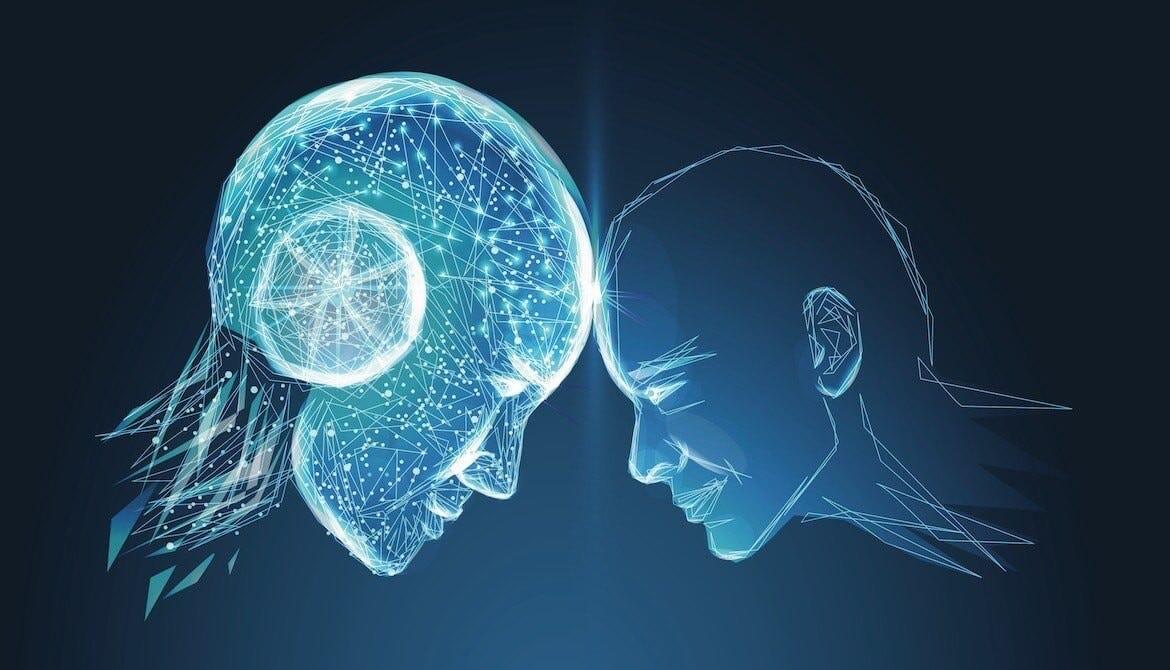

A year spent at the intersection of AI and coaching has made me more optimistic about what AI can do for us, and more careful about what it might do to us.
For most of our lives, personalised help came with some form of friction. You needed another person, an appointment, money, time, and often a reason “big enough” to reach out for help.
AI is removing much of that friction. Good answers, advice, analysis and reflection are now becoming available almost whenever we want them.
And after spending the past year working at the intersection of AI and coaching, I have started to think that this abundance creates a more interesting question than whether AI can give us good advice.
What happens to us when help becomes almost unlimited?
I have spent more than a decade and over 10,000 hours coaching people privately. Over the past year, I have also been building Ara II, an AI coach designed around much of what I have learned from that work.
It has been fascinating, surprising, uncomfortable, but more than anything, it has put me in a fairly unusual position.
I still spend a significant part of my week coaching people one-to-one.
At the same time, I’m seeing how AI is changing the way people enter that work, adapting how I coach as the technology changes, where I can add the most value, and seeing through Ara II how people use AI when they are trying to change something about themselves, their work or their lives.
I started this process mostly wondering how AI would change coaching. A year later, I find myself thinking about a much broader set of questions.
Where does AI genuinely make us better?
What are we gaining by handing more over to it, and what might we lose along the way?
Where does another human still add something AI cannot?
And as AI becomes capable of more, how do we decide what we actually want to use it for?
I certainly do not have all of those answers. But four things have become much clearer to me.
1. More help doesn’t always help
AI is quickly becoming one of the first places we turn when we need help.
We ask it to improve our work, prepare for difficult conversations, think through decisions, recognise recurring patterns or help us navigate the twists and turns of our personal lives.
I use it for exactly those reasons myself.
What I have started questioning is when all that help is genuinely helping us move forward, and when it starts reinforcing the very pattern we are trying to change.
For example, a perfectionist can use AI to make their work significantly better, and they can also keep refining something until putting imperfect work into the world becomes even harder.
An overthinker can discover a perspective they had missed, and they can also analyse a decision from every possible angle until certainty starts to feel like a prerequisite for action.
Someone who doubts themselves can prepare properly for an important conversation, and they can also prepare, rehearse and seek reassurance until they trust the preparation more than they trust themselves.
The behaviour can look almost identical, yet what changes is the function it is serving.
AI does not enter our lives independently of the patterns we already have. We bring ourselves to the technology, which means the same capability can help one person move forward and give another person more room to remain stuck.
What makes this particularly difficult is that the almost unlimited ability to reflect, process, prepare and optimise has made it easier than ever to keep going, even when more is no longer what we need.
There is always another prompt to ask, another perspective to consider, another version to improve or another explanation to explore.
At some point, we need to recognise when the help is still helping, and when it is keeping us from engaging with the uncertainty, discomfort and imperfection that are often part of moving forward.
Because sometimes more help genuinely helps, and sometimes the next step in your development is seeing what happens when you stop preparing for life and actually go live it.
2. Big problems usually start in small everyday moments
The other side of making help so accessible is that we no longer have to wait until something becomes a big enough problem to ask for it.
That has been one of the most interesting things to observe while building Ara II.
Traditional coaching has always had a relatively high entry point. It is expensive, scheduled in advance, and usually something people seek out once a problem, decision or ambition feels significant enough to justify it.
Even once someone has a coach, speaking once or twice a month naturally limits what makes it into the conversation. With Ara II, our usage data shows people engaging with coaching around three to four times in a typical week.
What we’ve noticed is that when that threshold drops, it changes what people bring to coaching.
They still bring the big questions, but they also bring the decision they keep postponing, the boundary they struggled to hold that afternoon, the meeting they are nervous about tomorrow, or the comment from their partner that somehow stayed with them all day.
On their own, most of these moments seem fairly ordinary, yet over time they start to tell you a great deal about how someone operates.
By the time we call something a problem, we may have already practised the pattern behind it for weeks, months or sometimes years through small decisions, reactions and moments that barely registered at the time.
It has made me think differently about when coaching can be most useful.
Working with something while it is still fresh gives you access to what was actually happening in that moment, before time and hindsight begin changing the way you remember it.
AI adds another capability here that I think we are only beginning to understand. It can hold those moments over time.
One difficult conversation may tell you relatively little. Ten conversations involving the same underlying fear, avoidance or behaviour can begin to reveal something much more useful.
What seemed unrelated when each moment happened can turn out to be different expressions of the same pattern.
For me, that is one of the most interesting shifts I’ve seen, because coaching can now happen much closer to the moment, and AI can connect those moments to a much bigger picture. You can start recognising a pattern while you are still living it, rather than months or years later when the consequences have become too significant to ignore.
The risk is that greater access can also make us feel like every uncomfortable moment needs to be analysed, prepared for or processed. At that point, support can start eroding the very self-trust it is supposed to help us build.
So the opportunity, as I see it, is to recognise the patterns shaping our behaviour earlier, while still leaving enough room to think, decide, struggle and work things out for ourselves.
3. You can’t solve what you can’t see
The entry point into coaching has changed a lot, and one of the more interesting and uncomfortable things AI has forced me to think about is what someone is actually paying me for.
People increasingly come into conversations with me having developed a pretty sophisticated understanding of themselves and the situation before we even speak. I think that is a good thing.
It also means that helping someone understand themselves better is becoming less valuable on its own.
A big part of the value I still see in working with another person is perspective and relationship.
Using AI can make our own blind spots harder to see because we are usually working from our interpretation of ourselves or the situation, and AI has become incredibly good at helping us make sense of that interpretation.
You can add more context, connect experiences and find more evidence to support what you already see, until you have built an increasingly convincing case around your own interpretation.
That case can be thoughtful, psychologically informed and grounded in things that are genuinely true, and, at the same time, the blind spot can still sit in what never made it into the case, or in the perspective from which all that evidence is being built and interpreted.
We can become much better at explaining ourselves without becoming much better at seeing ourselves.
I see this in my coaching practice quite often. It is still surprisingly rare for the problem someone brings into the conversation to be where the real work ends up. Somewhere underneath the explanation, there is usually something else driving it, often something harder to see, face or accept from inside their own perspective.
This is where another person can add something fundamentally different.
A good coach develops their own understanding of you over time. Through the relationship, they start to see what keeps repeating, where your actions diverge from your intentions and what your own interpretation may be leaving out.
Sometimes that is something you are genuinely blind to, and sometimes it is something you already sense and have found difficult to fully face, own or accept.
I think that second part matters more than I used to realise.
Insight alone rarely resolves what sits underneath a recurring pattern. At some point, progress requires seeing where you actually are, accepting what is there and recognising the part that is yours to own.
Doing that in front of another human being can change the experience. Saying out loud what you have struggled to admit, allowing someone else to see it too, and staying with it long enough to understand what is there can change your relationship with what you are beginning to see.
That creates a different, and often more useful starting point.
That is the deeper lesson for me.
AI can help us understand ourselves in extraordinary depth, yet another person can bring an independent perspective to the parts that are difficult to see from the inside, and sometimes being seen by that person is part of what allows us to face them ourselves.
4. More artificial intelligence will require more human judgement
We are still in an orientation phase with AI.
We are putting it into more parts of our work and lives while figuring out which of those uses we actually want to keep.
Some will probably become so normal that a few years from now we will wonder how we ever worked without them. Others may be things we hand over for a period and eventually decide we would rather keep doing ‘the old way’.
I can already see both happening in coaching.
I expect AI to take on much more of the everyday work of personal development, and I also expect more people to seek support from human coaches as the demands and complexity of work and life continue to increase.
The line between the two will probably remain messy for a while.
Someone may prefer AI for something deeply personal because they find it easier to be completely open with a machine, whereas someone else may want another person involved because the relationship itself changes how they engage with what they are working through.
I do believe AI will continue to change the nature of human-led coaching and keep raising its bar. As knowledge, frameworks, analysis and good questions become widely available, coaches will increasingly have to earn their value through judgement, perspective, relationship and their ability to help someone turn insight into change.
And the more time I spend working with both, the harder I find it to draw a clean line around what should belong where.
We are going to have more ways to get help, which means more choices about when to work something through ourselves, when a general AI is enough, when deeper expertise or context matters, and when another person brings something valuable to the process.
I think learning to make those choices well will become an important skill in itself, because just because something becomes possible, convenient or increasingly normal does not automatically make it good, healthy or productive for us.
There are parts of thinking, deciding and working through difficulty where something develops through the process itself. And I think having more intelligence and help available to us gives us more responsibility to recognise when that process still matters.
As AI becomes more capable and integrated into our lives, we will need to become more deliberate about what we hand over, what kind of help we reach for and what we continue to practise ourselves.
And because there is no established rulebook for much of this yet, I think we each have to bring radical awareness to the rules we are writing through the choices we make and the habits we form now.
The question is shifting
When I started building Ara II, I was mostly thinking about how AI would change coaching. A year later, I find myself thinking much more about how using AI might change us.
We tend to focus on the capabilities of the technology because they are developing so quickly and are easy to see. Yet, the changes in our own behaviour will probably be slower and harder to notice.
How often we reach for help, what we stop working through ourselves, what we become better at because AI supports us, and what we may gradually become less skilled at because something else now does it for us.
None of those changes will happen overnight, but rather through thousands of small choices that slowly become habits, and eventually simply become the way we are, work and live.
That is probably the biggest thing this past year has changed in my own thinking.
I am still deeply optimistic about what AI can make possible, and I am also paying much more attention to the person I become through using it.
I think that question deserves as much attention as what the technology becomes capable of next.
Want to receive my newsletter in your inbox?
Every weekend, I share one practical idea on the challenges and choices that shape how you work, lead and live.
No spam. I’ll never sell your details. Unsubscribe anytime. Privacy policy