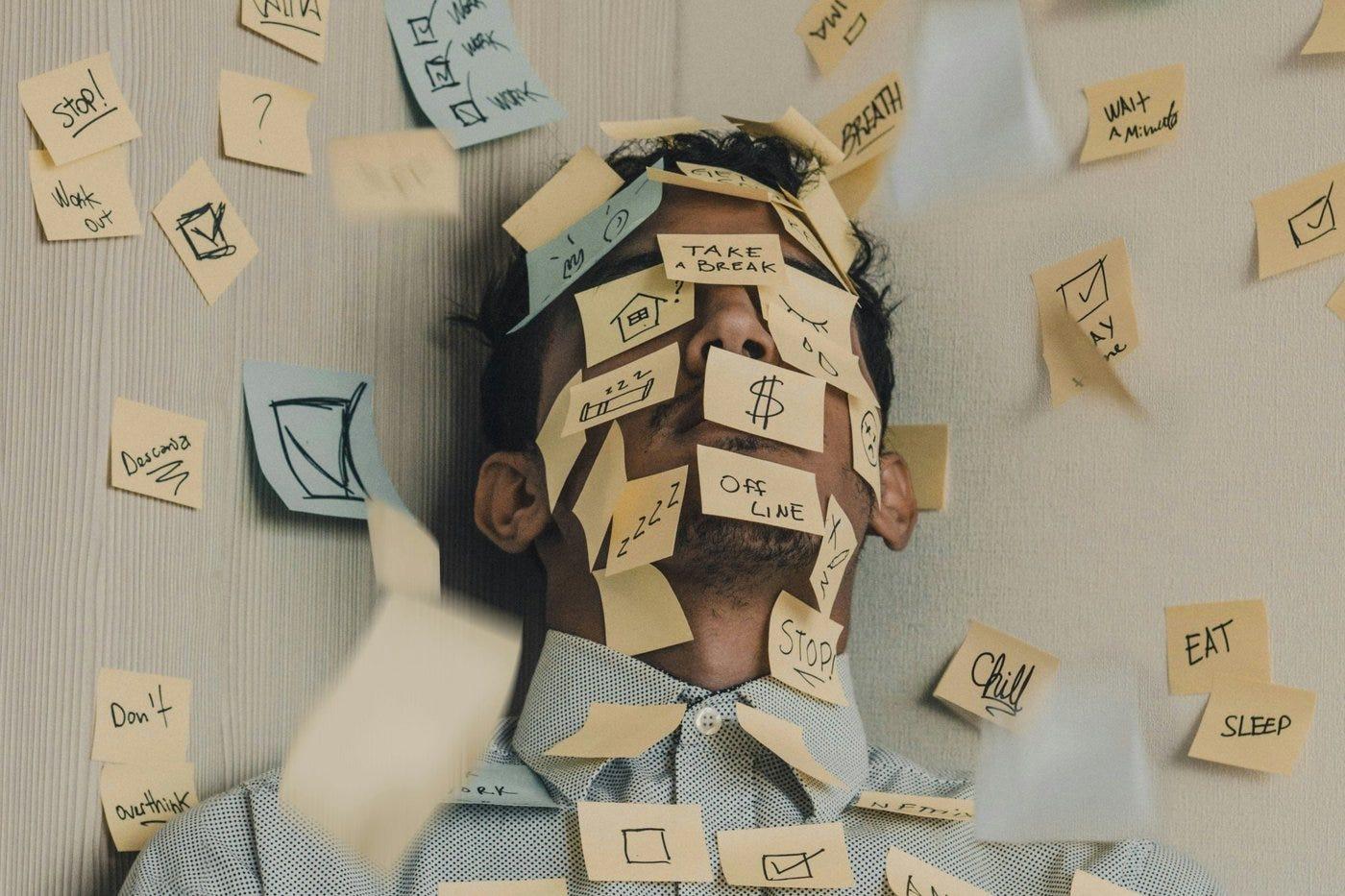
Why You Struggle To Switch Off
And why the wellness hacks fall short when your day feels permanently unfinished, and four steps to bring it to a close.
 · 10 min read
What keeps surprising me is the lengths people now go to optimise their energy and health. From cold plunges and breathwork to supplements and sleep trackers, there seems to be very little we’re unwilling to try in the hope of feeling better.
I understand the pull. Some of these practices are part of my own life, and I encourage my clients to explore what works for them too. But in ten years of coaching, I have never once seen someone come undone because they skipped their supplements or let their morning routine slide.
What I have seen, time and again, is people trying to optimise their way out of a life that works against what they need to feel and function well, and then wondering why they feel flat, wired, or both.
I think part of the problem is how much we’ve come to accept as normal.
Over the past 20 to 35 years, we’ve gone from having a physical workplace we arrived at and left to checking emails the moment we wake up, taking calls over the weekend and finishing something on the sofa while our family sits beside us.
There were also parts of the day when people simply couldn’t reach us, yet now we’re available at all times, even when we’re with our partner, playing with our children or trying to take some time for ourselves.
And beyond work, we measure our lives against the best moments of thousands of strangers online, while our feeds fill every spare minute with news, opinions and outrage from around the world.
These things have become such an ordinary part of life that we rarely question what they’re asking of us. Instead, when we struggle to switch off, sleep or simply enjoy ourselves, we assume there’s something about ourselves we need to fix or improve.
In my experience, though, people’s responses usually make perfect sense once we look at the conditions they’re living with. There’s a lot to say about each of these, but in this article I want to focus on the one where I’ve seen relatively simple changes make the biggest difference, which is how people organise their work and lives.
The permanently unfinished day
In my work, I keep meeting people who experience their days as permanently unfinished. They stretch themselves between work, family and the expectations they place on themselves, but no matter how much they do, they still feel they should have done more.
I tend to see this take two forms.
Some plan around everything that needs doing and commit to more than they can realistically complete within the time and capacity they have.
Others keep going without deciding what they intend to finish, hoping enough effort will allow them to catch up, yet as soon as one thing is done, they’re often already behind on the next.
Both responses make sense. Committing to everything can feel like the only way to meet what’s expected of them, and leaving the day undefined spares them the discomfort of choosing what won’t get done. The same happens outside work, with things to organise at home, people who depend on us and the commitments we make to ourselves.
Each of them gives us a good reason to keep going.
Either way, there’s little opportunity to experience a sense of completion and control. And, over time, what remains unfinished starts to feel like evidence that they’re failing to manage their work and lives.
And because the mind tends to orientate towards what’s left unfinished, it often comes home with them. They’re at dinner, but part of their attention is still on the things they ‘should’ be doing. Or they finally have time for themselves or the people they love, yet struggle to switch off, be present or enjoy the things that would help them recover.
And, over time, that persistent sense of being behind, of having little control over their days or of falling short of their own expectations can keep the body’s stress response active, with symptoms ranging from muscle tension and stomach problems to restlessness and irritability.
The recovery paradox
Recovery sounds like something that happens by itself once you stop working. In practice, it’s a bit more complex than that. To recover, we need to be able to leave work behind mentally, let our body come down from the day and feel that our free time is ours to spend.
That’s hard to do when the day ends with a list of open tasks and a sense that we’ve lost control of it. There’s always something left to deal with, and a reason to be somewhere other than where we are.
Unfortunately, it’s often the people who need recovery most who find it hardest. The psychologist Sabine Sonnentag calls this the recovery paradox. The more demanding our work, the more we need to recover, and the harder recovery becomes.
We see it in the very hours that are meant to restore us. We exercise less and find it harder to switch off. An evening with the people we love does little for us when we’re too wired to be present. And with the body still on alert at night, we may go to bed early but wake in the middle of the night, or get up after a full night’s sleep still feeling tired.
And when we don’t get that recovery, our capacity shrinks. We have less energy, think less clearly and have less tolerance for stress and uncertainty, so the same demands become even harder to manage, reinforcing the very feeling that we’re failing to cope.
And so the cycle continues.
What we’re recovering from
This is why, alongside cold plunges, breathwork or whatever else we do to support recovery, we need to look at what we’re recovering from. Because if the way we organise our days creates the underlying conflict with what we need to feel and function well, that needs to change too.
I’m aware this can sound like one more thing people are asked to fix themselves. And for many, the problem lies largely in the work itself, whether that’s a workload no one could complete in the hours available, a culture where replying late at night is expected or a manager who measures commitment by availability. Better organisation won’t solve that, and asking people to plan their way around it can add to the sense that they’re failing.
Still, even then, how we organise our days affects how much of that pressure we carry home. A clear end to the day also makes the gap between what’s expected and what’s possible visible, and that is often what makes an honest conversation about workload possible.
Choosing what won’t get done
One place I often start with clients is helping them create a day they can bring to a close. That begins with something most of us would prefer to avoid, which is deciding what won’t get done.
That decision is uncomfortable for good reasons. It can mean disappointing a colleague, keeping a client waiting or falling short of a standard we hold ourselves to. So it makes sense that people keep their days open-ended, because as long as nothing is ruled out, they never have to feel that discomfort. It comes back later, though, at the end of the day, as the sense that they should have done more.
I know this from my own life. Last year, I was running my coaching practice and building a start-up from the ground up, while also caring for my mum, who was ill with cancer. Being everywhere and doing everything was simply impossible. That period forced me to choose, and to protect both my well-being and my capacity to keep showing up.
Choosing like that stays uncomfortable, however often we do it. The question is whether we’re willing to feel that discomfort for something that matters more to us, like an evening with our family, a proper night’s sleep or the energy to show up again tomorrow.
Even then, some work will still be waiting when we stop. A closed day isn’t empty of unfinished work. What makes it feel closed is that we chose what to work on, can see what we’ve done and know when and how we’ll deal with what’s left. That brings back the sense of completion and control we need to put work down and be present for whatever comes next.
Always Be Closing
I call this approach Always Be Closing (yes, a nod to the old sales motto), and in practice it comes down to four steps. It usually takes two to four weeks before it starts to feel natural, so be patient with yourself in the beginning.
1. Set clear boundaries for your working day and week
A boundary gives your day an edge, a moment when you’re allowed to stop, and that is what makes switching off possible in the first place.
→ Choose your working days and your start and finish times.
→ Make time for commitments outside work, for yourself and for the people you care about.
→ Put those hours in your calendar and let people know when you’re available.
→ Decide beforehand what would be a genuine reason to make an exception.
Choose times you can actually keep most weeks. It may feel uncomfortable the first few evenings you don’t reply, but that tends to ease once you, and the people around you, get used to it.
It also helps to have something that marks the end of the day. For me, that’s a walk with my dog. I stop around the time I’ve set, some days a little earlier, some days slightly later, and the walk helps me make the transition from work to the rest of my evening.
2. Plan what you can realistically complete within those hours
Most of us underestimate how long tasks take, even ones we’ve done many times before. Psychologists call this the planning fallacy, and it happens because we picture how a task will go this time and forget how similar tasks went before. A plan built on those estimates makes an unfinished day almost certain before it starts.
→ Start with the time you actually have. Take your working hours, subtract meetings and other commitments, and see what’s left.
→ Choose what matters most, and estimate each task by how long similar work took last time.
→ Schedule what fits, and keep part of the day free for breaks and whatever comes up. If interruptions are a normal part of your role, plan for them too.
→ Postpone, delegate or reduce what doesn’t fit, and decide this early, while there’s still time to let people know.
Be prepared for your plan to look smaller than you’re used to. That’s fine. And if your work keeps exceeding your capacity week after week, better planning won’t solve it. That calls for a conversation about your commitments, your role(s) or the support you need.
3. Review and acknowledge what you’ve completed
When the to-do list is all we look at, we only see what’s left. Progress is one of the things that makes a workday feel good, and it’s easy to overlook when nobody points it out. A short review makes it visible.
→ Reserve the last ten minutes of your working day to review the day.
→ Acknowledge what you completed, including the unplanned work.
→ Compare your plan with what happened and see what got in the way.
→ Use that to adjust tomorrow’s plan.
Then judge the day with that full picture in view. You’ll often find you did a lot more than it felt like.
4. Give unfinished work a clear next step, then stop
Unfinished tasks keep pulling at our attention after work. A clear next step, with a time attached, makes it much easier to let them go once you stop, especially if you care a lot about your work.
→ Decide what still needs doing.
→ Write down the next action and schedule when you’ll return to it.
→ Let people know if a commitment needs to change.
→ Close your work apps and turn off work notifications.
If something moves to tomorrow, weigh it against tomorrow’s priorities so the plan stays realistic. And when work still comes to mind in the evening, which it will, remind yourself that it’s written down and you’ll get back to it.
When life asks more of you
Of course, some periods ask far more of us than usual. A newborn, an investment round or someone close to us needing care can make clear boundaries and proper recovery difficult.
But even then, or perhaps especially then, we need to reconsider what we expect elsewhere, what can wait and where we may need help.
And when there is room, resist the urge to fill it all. Leave yourself an evening without plans, time for a lunch with a friend without having to rush to the next thing, or for your child to explain a game they’ve just invented, including all seventeen rules.
That’s usually where some of the best moments happen, and where real recovery tends to take place.
Want to receive my newsletter in your inbox?
Every weekend, I share one practical idea on the challenges and choices that shape how you work, lead and live.
No spam. I’ll never sell your details. Unsubscribe anytime. Privacy policy